
The Storytelling Brain
Stories evolved as tools of survival, but today they shape our beliefs, identities, and societies

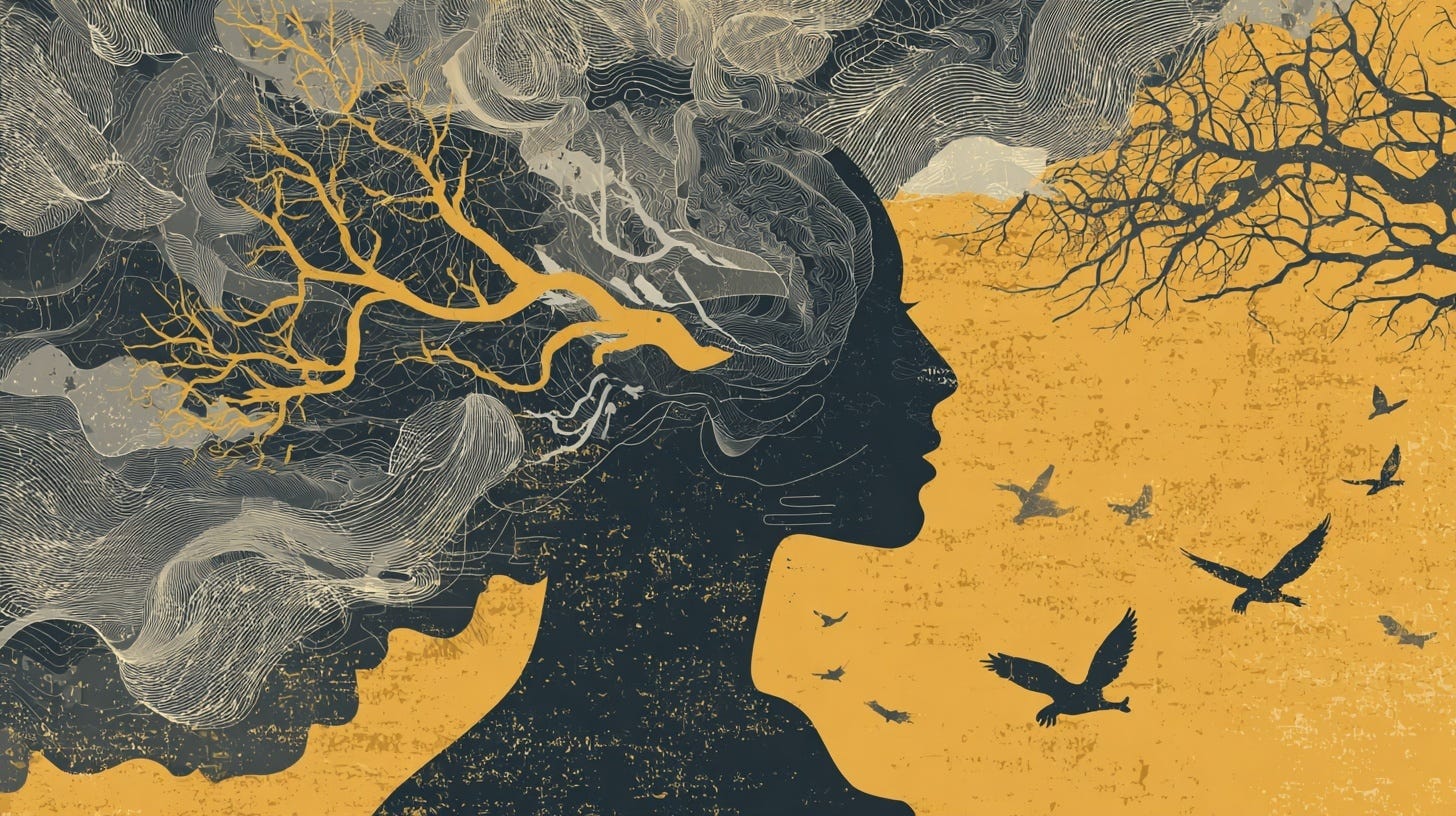
Why do we remember a film more easily than a lecture? Why does a good novel move us more deeply than even the most precise statistical report? And why are we sometimes willing to believe utter nonsense—so long as it is skillfully presented? The key to these questions lies in stories. They are not merely a way to pass the time; they represent a fundamental tool of thought, a means by which we interpret the world and share our understanding with others.
We often underestimate how powerfully stories shape our perception of reality. Human beings need narratives to help us make sense of what happens around us. When we are left without compelling explanations, we become vulnerable to conspiracy theories, which are, after all, stories as well. Though untrue, they effectively fill the void, impose order, and offer simple explanations for complex phenomena.
Stories captivate us because they resonate with the way our brains function. They fit remarkably well with our cognitive architecture. Humans are skilled at recognizing causes, anticipating the future, and inferring the thoughts of others. We did not develop these abilities because of stories—yet it is precisely through stories that we can exercise them to the fullest. When we listen to a narrative, we imagine events unfolding, follow actions, feel tension, and search for meaning. A story is therefore not merely a sequence of information, but an experience we relive in our minds. And what we experience, we remember. A story is often not just a tool for explanation, but its very essence.
The earliest larger organisms, which spent most of their time immobile, had no need for brains. Their behavior was simple, their environment predictable, their responses automatic. Everything changed, however, with the emergence of active movement and hunting. An animal that had to pursue prey while avoiding predators required a central system to coordinate conflicting streams of information. From this necessity, the first brains came into being.
At first, these systems followed a simple principle: approach what is useful, avoid what is harmful. This basic algorithm enabled survival for worm-like creatures that lived some 600 million years ago. Yet the system was rigid and incapable of learning, unable to adapt to change.
About a hundred million years on, early vertebrates developed the ability to learn from experience. Their brains began to construct internal maps of the world. These maps allowed them to interpret their surroundings and anticipate future events. The brain became a tool for shaping and updating an inner image of the external world—a turning point in the evolution of behavior. From then on, life was no longer merely reactive, but anticipatory. Still, at first, this inner image remained passive. The true leap came when our ancestors began to actively use these inner maps to rehearse the future.
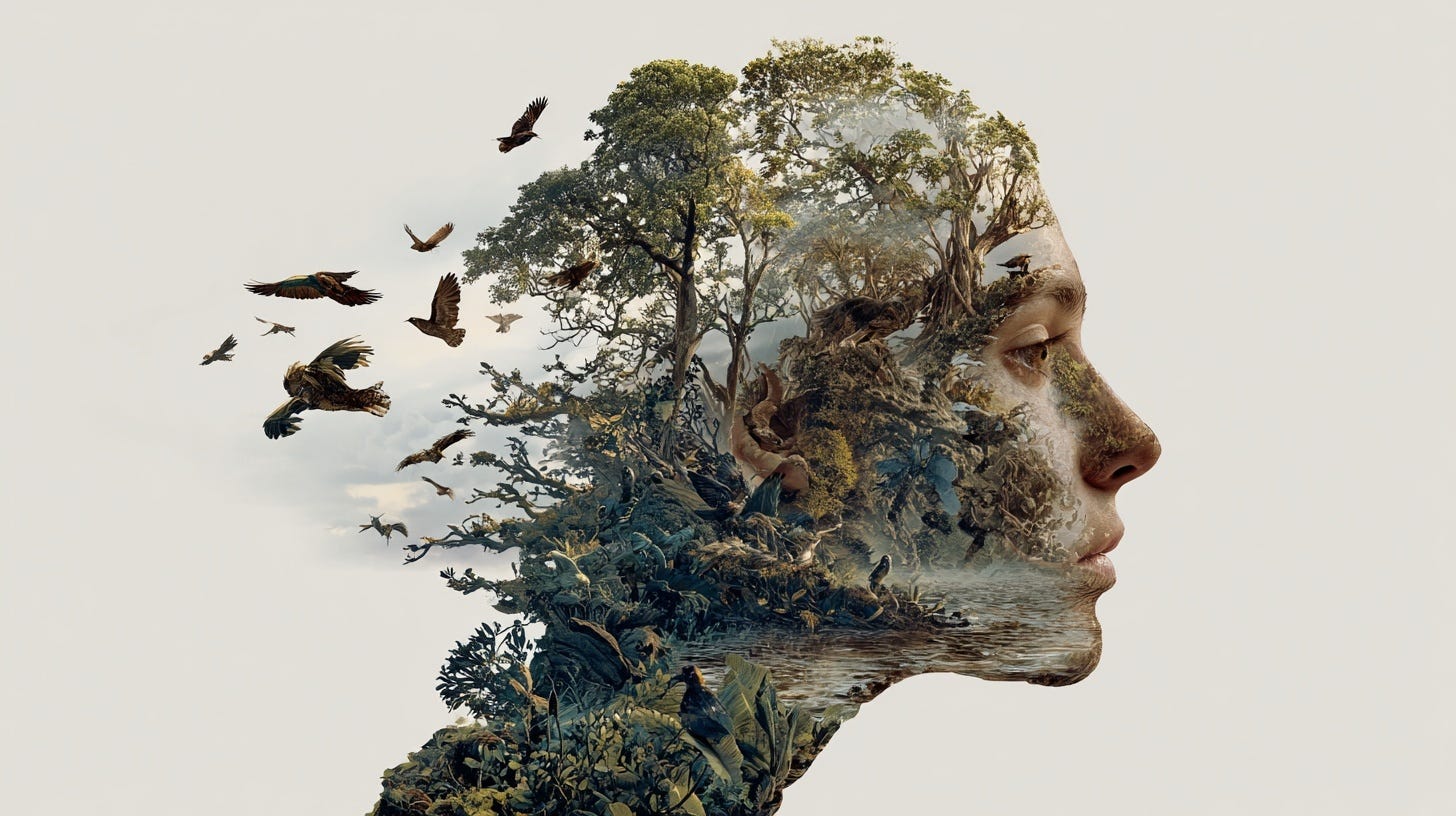
Building on this foundation, three key skills emerged that directly enabled the comprehension of stories. The first was inner simulation. Our ancestors could imagine different scenarios before they actually unfolded. They could learn from imagined experiences without incurring real risks. This capacity to generate narratives became one of the crucial evolutionary advantages.
A second great step was taken by the ancestors of primates several tens of millions of years ago, when they began to weave an understanding of other beings into these simulations. They could envision what others were thinking, feeling, and intending. For the first time, stories acquired characters with inner lives. A narrative was no longer just a sequence of events, but a stage on which relationships unfolded between individuals with differing perspectives and goals.
The decisive breakthrough came with the rise of language. While other species communicated only about immediate states—danger, food, dominance—language made it possible to speak of things not present in the here and now: the past, the future, and entirely imagined worlds. It allowed humans to begin sharing their narratives with others. Language became a means of synchronizing mental worlds within a community. Stories turned into a powerful medium for transmitting experiences, values, and cultural patterns. Thus began the great accumulation of knowledge, which could be passed on and expanded across generations.
This evolutionary heritage of brain development has profound consequences for the functioning of modern society. The ability to tell stories grants us extraordinary power, yet it can also dangerously mislead us. On the one hand, stories act as social glue. Shared narratives—myths, histories, religious teachings, or corporate visions—create a sense of belonging and enable cooperation among strangers. Stories are also an effective tool for transmitting knowledge, since we remember complex content more easily when it is cast in narrative form. Above all, they help us make sense of the world. They impose structure and logic on events that might otherwise appear random.
Yet it is precisely this power that also makes us vulnerable. Because our brains are so attuned to storytelling, we are highly susceptible to manipulation. Propaganda, advertising, and fake news often succeed because they address us in the form of a story. More often than not, we prefer to believe a simple tale with clear characters rather than a messy reality filled with contradictions and uncertainty.
A story we accept quickly becomes part of our worldview. It reinforces beliefs, shapes identity, and influences decisions. We often reject facts that contradict it and search for confirmation of what we already believe. Thus, the very stories that connect us can also blind us.
It is therefore essential to recognize that if people lack compelling stories to help them understand the world, their minds will spontaneously cling to whatever narratives are available and seem persuasive. In the absence of clear explanations, substitute stories take root—whether accurate or not. This is why a healthy community must pay close attention to the stories it circulates and promotes. It matters profoundly which narratives fill the public sphere, for they shape not only our understanding of the world and its problems, but also the horizon of our common future.
Translated from the Slovene original, available here: Bitja zgodb.